The Philippine Atmospheric, Geophysical, and Astronomical Services Administration (PAGASA) has warned the country of a “strong to very strong” El Niño, with conditions expected to persist well into the first half of 2027 and may reach peak intensity before the end of 2026.
For commercial and industrial (C&I) operators, the environmental phenomenon poses an operational crisis due to soaring power costs, an overstrained national transmission grid, and rotational outages.
How El Niño squeezes power supply
How El Niño squeezes power supply
Extreme heatwaves drive up overall energy consumption across all sectors. A surge in cooling demand persists while a collapse in power reserve margins occurs.
This creates a supply-and-demand squeeze, driving electricity prices to skyrocket.
During El Niño, severe dry spells drop water levels across major dams, which directly lowers hydraulic head pressure and could cut hydropower generation by as much as 40%, according to projections from the Department of Energy (DOE).
With hydro dams running dry, conventional thermal assets such as coal, gas, and geothermal plants are forced to pick up the slack. Yet, these power plants require vast amounts of cool water to regulate steam turbines and ensure safe operations.
Facing depleted reservoirs and higher ambient water temperatures, plant operators are forced into thermal “derating” or intentional throttling of electricity output below capacity to prevent equipment from overheating and structural failure.
In the Philippines, the Institute for Climate and Sustainable Cities’ monitoring in partnership with the DOE shows multiple baseload units are already operating under derated capacities. This strips the national grid of essential reserves at the moment the demand reaches its peak.
This power crisis does not stop at power plants.
Extreme ambient heat raises electrical resistance along high-voltage transmission lines. This increases energy loss before power even reaches industrial centers. Substation transformers, operating past their thermal limits, face frequent tripping.
These events force the National Grid Corporation of the Philippines (NGCP) to issue yellow alerts when operating reserves are thin and red alerts when power supplies fall critically short of consumer demand, prompting rotational brownouts to prevent a total grid blackout.
Over the past two months, the NGCP has issued yellow and red alerts over different regions in the Philippines.
For C&I facilities, this power loss means halted operations.
While many facilities rely on diesel- or gas-powered generators for backup power, surging fuel volatility turns emergency generation into an expensive and unsustainable solution.
Securing Grid Independence
Securing Grid Independence
Faced with this structural vulnerability, forward-looking enterprises are moving away from centralized dependence. Solar power has become the most viable hedge against grid instability.
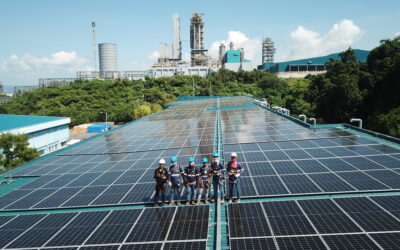
Transitioning to solar energy reduces dependence on fragile transmission lines by generating clean power directly on-site at C&I facilities.
Unlike conventional power plants that require years to construct, solar systems can be deployed rapidly to relieve immediate supply deficits and can be paired with battery energy storage systems (BESS) to supply continuous and reliable power even during grid brownouts.
With a proven track record, Upgrade Energy Philippines (UGEP) stands out as one of the most trusted industry leaders in renewable energy.
It delivers end-to-end C&I solar solutions, combining high international engineering standards with deep local market expertise. UGEP provides a reliable power source by integrating advanced solar photovoltaic arrays with BESS.
To eliminate financial barriers, UGEP offers flexible financing options through Solar Power Purchase Agreements (PPAs). Under this model, businesses can adopt utility-grade solar systems with zero upfront capital expenditure, paying only for the electricity generated at rates lower and more predictable than the traditional grid.
The urgency for such alternatives has never been clearer. As El Niño tests and pushes the country’s power grid toward its limits, the C&I sector can no longer afford business as usual.
The solution, however, can be found in the crisis itself.
Harnessing the very sunlight that strains the national grid provides facilities with reliable and cost-effective power. Through this transition, UGEP continues to fulfill its pledge to a sustainable and empowered future.
Sources
Sources: DOE, DOST-PAGASA
Other Sources: ICSC, Power Philippines, Manila Standard